
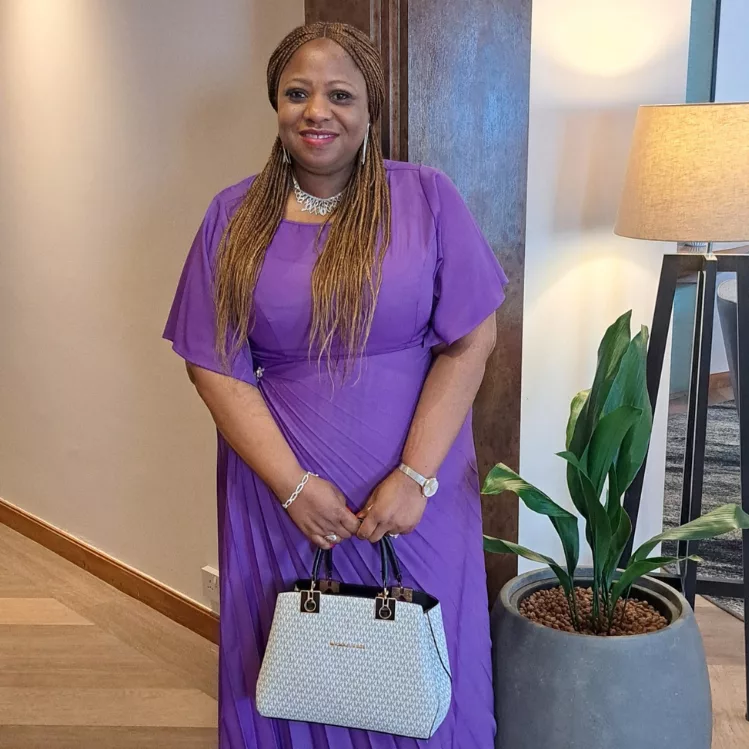
Kemi Emmanuel ’s journey from college principal to corporate powerhouse is a masterclass in leadership, resilience, and impact. With years of experience guiding students, staff, and entire communities, she has honed a leadership style rooted in clarity, compassion, and purpose. Today, Adesola translates those lessons into the corporate world, mentoring, coaching, and inspiring others to lead with intention and transform their teams—and themselves.
“Leadership isn’t about titles—it’s about impact, clarity, and compassion.”
How has your experience as a college principal shaped your perspective on corporate leadership?
My experience as a college principal has profoundly shaped the way I view corporate leadership in ways I didn’t fully understand until much later in my career.
Leading a college isn’t just about administration; it’s about empowering people, managing diverse personalities, navigating crisis, and constantly balancing strategic vision with human needs. Those years taught me that leadership is never about titles, it’s about impact and influence.
As a principal, I learned many skills some are as follows:
- Lead with clarity and purpose.
Every decision affected not just the staff but hundreds of learners and their families. That level of responsibility trained me to lead with intentionality, a skill that translates directly into the corporate world where clarity drives productivity, culture, and long-term success. I find clarity is essential and that is why I support people in their publishing journey today to find clarity through every step of the process. - Manage people, not just systems.
Education settings are emotionally charged environments. You’re dealing with students’ success, staff morale, government regulations, parents’ expectations, and constant change. While having systems in place are vital for any corporate leader, one of my greatest lessons was recognising people’s strengths, navigating conflict, and motivating teams through compassion rather than control. That is exactly what effective corporate leadership requires. I learnt more than anything to be an investor in people. This skill still drives my focus today in my business and interactions as an empowerment coach and speaker. - Build structures that allow people to thrive.
Running a college means developing frameworks, curriculum, operations, safeguarding, compliance, KPIs etc while still leaving room for growth, innovation, and creativity. Today, as a business leader and CEO, I use that same mindset to build systems that support my team, clients, and brand and teach other leaders the importance of structure. - Lead through crises with resilience and emotional intelligence.
The importance of emotional intelligence in today’s corporate world cannot be overstated. During my time as a college principal, emotional intelligence wasn’t spoken about as openly as it is now, but I instinctively understood the value of compassion, empathy, and truly seeing the people I led. That awareness is what eventually drew me into mental health nursing.There were seasons where everything seemed to fall apart, funding challenges, staff issues, complex family dynamics, or unexpected inspections. Those moments forced me to develop strong crisis-management skills, remain calm under pressure, and make clear decisions even when the environment felt chaotic.But beyond the strategy and the leadership techniques, I learned something deeper:
your team is one of your greatest assets.Supporting them, understanding their emotional landscape, and creating a safe environment for them to navigate pressure became a non-negotiable part of my leadership. That lesson now shapes how I lead in the corporate space. Resilience is essential, but resilience combined with emotional intelligence is what transforms a leader into a stabilising force for their organisation.- Champion diverse voices.
A college is a melting pot of cultures, abilities, and learning styles. Being a principal allowed me to develop a leadership style rooted in inclusion, empathy, and empowerment, principles I now carry into every boardroom, coaching room, and business environment.
- See leadership as service.
My role wasn’t to dominate; it was to uplift, students, staff, and the community. That service-driven perspective is the foundation of my corporate leadership approach. I don’t just lead businesses; I lead people toward purpose, confidence, and transformation.
What advice would you give to women looking to start a business while managing personal responsibilities?
The Power of the Intentional ‘No’: Balancing Business and Life
Women are masters of multi-tasking, effortlessly navigating roles like mother, wife, caregiver, professional, and friend, often serving as the emotional bedrock for everyone around them. When we decide to start a business, the challenge isn’t dropping these roles, it’s learning the radical act of prioritizing ourselves without guilt.
This is where many of us falter. We become overwhelmed because we default to saying ‘yes’ to every demand, leading to porous boundaries. The result is often a silent struggle with anxiety and depression fuelled by social stressors. To build a business while managing your life, you must first give yourself the grace to grow at your own, unique pace.
My upcoming book, “The Woman in Red,” provides a strategic blueprint for women to step into their leadership power. A central theme is the importance of a strong mindset and the impact of intentional boundaries. Think of fire used for cooking: it must be focused and contained to perfectly prepare the food. If it spreads unchecked, it causes harm. We need this same focused boundary in our relationships and our business.
This discipline starts with clarity about your purpose, knowing exactly what you are trying to achieve. This clarity makes the intentional creation of boundaries possible. We must also build simple systems to reduce stress, especially in our high-demand social media landscape; here, AI can be a powerful and effective ally.
Set realistic expectations to guard against self-imposed pressure that leads to burnout. Be brave enough to ask for support and always choose consistent action over paralyzing perfection. Protect your mental health, surround yourself with supportive women, and celebrate your wins—no matter how small.
You absolutely can achieve balance when you honour your capacity, prioritize with intention, and lead your life with unshakeable confidence.
How do you identify opportunities that align with both passion and profitability?
I identify opportunities that align with passion and profitability by combining self-awareness, strategic thinking, and market insight.
The first step is understanding what energises me and lights me up. Work I can do repeatedly without feeling drained, this is passion. I found this in my current business. I was passionate about writing and publishing books, so I turned this into my business. Passion is important because it sustains you when challenges come. I recently wrote about what it means to be a “Ho (Hobby owner) or a BO (Business Owner) and the result of combining both is profitability.
But passion alone is not enough. So, I ask three key questions:
- Can what I am passionate about solve a real problem that people are willing to pay for?
Every profitable business is built on solving a need. I look at trends, pain points, gaps in the market, and areas where people constantly seek solutions and I align my passion with such opportunities. - Do my skills, experience, and personal story position me as the right person to solve this problem?
This is where alignment happens. When your strengths meet a genuine need, you create value effortlessly. - Can this idea grow and generate long-term income?
I assess scalability, recurring demand, and whether the opportunity fits into my bigger vision. If it cannot grow with me, it’s not the right fit. If it is my passion, it remains a hobby and not a business.
I also believe in testing small before committing big. A quick pilot, a soft launch, or a small offer can reveal whether the market wants what you’re building. Data helps remove emotion and gives clarity especially as passion can be built around emotion.
Ultimately, the best opportunities sit at the intersection of passion, purpose, skill, market demand, and long-term sustainability. When all align, you’ve found something worth building.
What are the key principles behind turning personal experiences into publishable content that impacts others?
The key principles behind turning personal experiences into publishable content that truly impacts others are clarity, authenticity, purpose, and structure.
- Start with clarity about the message.
A lot of my writing comes from personal experience. The real power comes when you identify what you want readers to walk away with from your experience. Your message becomes the anchor that guides your storytelling. - Be authentic and honest.
Readers connect to truth. Sharing the highs, lows, mistakes, and breakthroughs makes your story relatable. Vulnerability is not weakness, it is impact. When people see themselves in your journey, transformation happens. - Make the story bigger than you.
A book about your life is not just about you. It is about the reader, their pain, their questions, their struggle, their hope. Write with the mindset:
How can my experience help someone else grow, heal, or gain clarity? - Turn emotions into lessons.
Every challenge you faced should offer insight, guidance, or a practical principle. Readers don’t just want the story; they want the wisdom inside the story. - Use structure to create flow.
Impactful books are not just emotional; they are organised. A clear outline helps you shape your experiences into chapters that build on each other, creating momentum and coherence. - Protect your voice.
Your uniqueness, your tone, your reflections, your personality, is what separates you from every other author. Write from your authentic voice, not from a place of imitation or perfection. - Honour the healing process.
Writing about personal experiences can be emotional. Give yourself grace, write from a healed or healing place, and be mindful of which details help the reader and which details simply reopen old wounds. - Keep the reader’s transformation at the centre.
Impactful content always answers:
What will the reader gain?
What will change for them?
What problem will my story help them solve?
When your personal experience is shaped with purpose, insight, and clear intention, it becomes more than a story, it becomes a tool that educates, empowers, and heals.
How do you stay innovative in industries that are constantly evolving, like publishing and property investment?
I stay innovative by remaining a student of my industry. Publishing and property are constantly shifting, so I prioritise continuous learning, data-driven decisions, and adaptability. I pay close attention to market trends, new technologies, AI tools, and consumer behaviour. I test ideas quickly, listen to my audience, and stay open to change. Innovation is not about chasing every new trend; it’s about understanding what adds value and implementing it with intention.
Most importantly, I combine industry knowledge with creativity and courage, that’s where new opportunities are born.In your opinion, what differentiates an ordinary leader from an exceptional one?
An ordinary leader manages people; an exceptional leader transforms them.
Ordinary leaders focus on tasks, titles, and authority. Exceptional leaders focus on purpose, emotional intelligence, and impact. Exceptional leadership is rooted in authenticity, service, strategic thinking, and the ability to inspire confidence in others. It’s not what you do for people, it’s what you bring out of them. A truly exceptional leader elevates everyone around them.How do you cultivate resilience when navigating unexpected challenges in business?
Resilience for me begins with mindset. I’ve learned to see challenges as invitations to learn and grow, not threats to my progress. I ground myself spiritually, reflect before reacting, and lean into the lessons each situation brings. I also surround myself with people who sharpen my thinking, hold me accountable, and remind me of my capacity.
Resilience grows when you accept that setbacks are part of the journey, not the end of it. I tap into faith, clarity, and strategy and that combination keeps me moving forward.What strategies do you use to foster meaningful connections and collaborations in professional networks?
I build relationships with intention, not convenience. For me, it’s about showing genuine interest, listening more than I speak, and offering value long before asking for anything. I nurture connections through consistent communication, collaboration, and shared purpose. Most of my strongest partnerships came from being present, being helpful, and being authentic.
People connect with people who make them feel seen, supported, and valued, that’s the foundation of all meaningful networking.How has mentoring and coaching others shaped your own growth as a leader?
Mentoring has been one of my greatest teachers. Guiding others forces you to refine your own values, deepen your self-awareness, and stay accountable to your own standards. Every client, student, or mentee reflects something back to you, their growth keeps you humble, focused, and inspired. Teaching others has sharpened my leadership, strengthened my voice, and expanded my capacity. It reminds me daily that leadership is service, and service is where true influence is born.
What emerging trends in entrepreneurship and education excite you the most today?
I’m excited by the rise of digital entrepreneurship, AI-driven creativity, and accessible education. Today, people can build businesses from their phones, publish their own books, create online courses, and monetise their skills globally. AI is democratising opportunities that were once out of reach.
I’m also inspired by the shift toward purpose-driven careers, people want work that aligns with their values, not just their income goals. Personalized, flexible learning models, micro-credentials, and self-paced education are reshaping how we learn and earn.
For me, the future is full of possibility, especially for women, creatives, and those who want to turn their story into impact. - Champion diverse voices.